

What happens to all your old packaging when your brand gets a fresh look? The new packaging looks great, the launch date is fixed, and retailers have approved the new design. But there’s one problem: your warehouse is still holding 40 pallets of the old design, from printed cartons and sleeves to rolls of labels and finished products already packed in the old branding. And none of that leftover stock was included in the rebrand budget.
The good news? It doesn’t all have to go to waste. Depending on the stock and its condition, you may be able to sell it, reuse it, rework it, recycle it, or arrange disposal.
The real cost often comes from waiting too long to decide what to do. While stock sits untouched, storage costs continue to build and opportunities to recover its value may shrink. This guide explores your options, explains how to choose the right approach and shows you how to prevent the same problem during your next rebrand.
Why Does Packaging Stock Become Obsolete After a Rebrand?
Packaging rarely becomes obsolete on launch day. It becomes obsolete the day someone approves new artwork without first checking what is already on the shelf in the warehouse. There are four common triggers.
Changes to Logos, Colours and Brand Identity
A visual refresh can make old packaging commercially unattractive overnight. But a cosmetic change does not automatically make the packaging unusable. A carton with last year’s logo can still be a perfectly good carton. The question is whether anyone downstream will accept it.
Product Relaunches, New Formulations and Updated Claims
This is where things get serious. If ingredients, specifications, instructions, warnings, or certification claims have changed, old packaging may now carry information that is out of date. Using it could mislead customers, so each pack needs to be checked rather than assumed.
Retailer, Barcode and Product-Listing Changes
Retailers want the product on the shelf to match the product in their system. A new SKU, a changed pack size or updated online imagery can make old-look stock difficult to sell through the same channel. Be careful, though: a minor design change does not automatically mean a new barcode or a compliance problem. Check your retailer’s requirements and the guidance from GS1 UK before assuming either way.
Excess Print Runs and Leftover Materials
Minimum order quantities, forecasting errors, cancelled orders and early production of the new packaging all leave surplus cartons, labels and sleeves behind. Printers rarely sell you exactly the number you need.
What Types of Old Packaging Stock Can Businesses Be Left With?
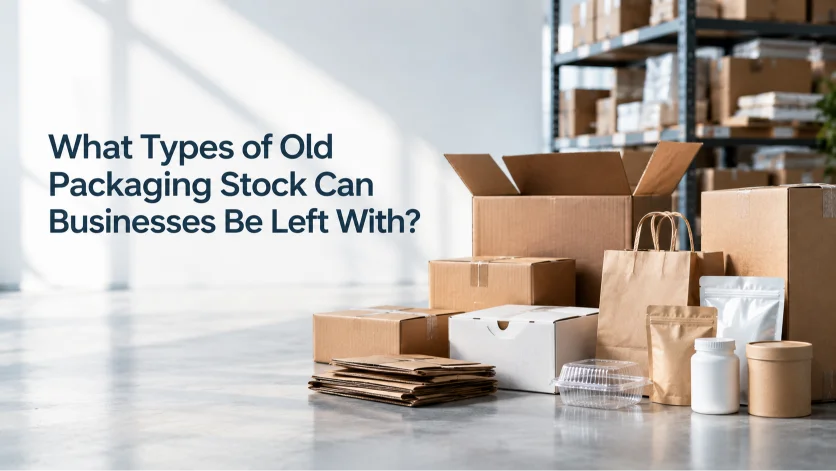
Not all obsolete packaging stock is the same, and treating it as one lump is the first mistake. Sort it into four groups before you decide anything.
Unused Printed Cartons, Boxes and Labels
Packaging that has been printed but never filled. Its value is mostly in its materials, unless the design is still usable somewhere.
Finished Products in Old Branded Packaging
This is usually the most valuable category. The contents are fine; the packaging is simply last season’s. Suitable finished goods often have a commercial route that empty packaging does not.
Promotional Packaging and Display Materials
Campaign boxes, gift sets, seasonal packs, point-of-sale displays and promotional sleeves. These are tied to a moment that has passed, so their window to be useful is short.
Packaging Components With Different Reuse Potential
A plain transit carton, a branded sleeve and a mixed-material pack (card, plastic window, adhesive) have completely different recovery routes. Assess them separately.
What Are the Options for Dealing With Old Packaging Stock?
There are seven realistic routes. They are not a ranked sequence. The best one depends on condition, quantity, product status, resale permissions, and environmental impact.
1. Use It Up During a Planned Sell-Through Period
The cheapest solution is often the least exciting: finish the old stock before switching to the new. This works when the packaging is still accurate and compliant, and when your retailers and distributors agree on a transition window.
Watch out for: two designs of the same product sitting in the same channel, which is exactly what causes customer confusion and listing mismatches. Track old and new stock separately in your inventory system.
2. Reuse Suitable Packaging Materials
Plain cartons, protective inserts and transit packaging can often be reused internally. Branded primary packaging is a different matter, because it carries claims and branding that must stay accurate.
Watch out for: reusing anything that is not fit for purpose, or whose printed information would now mislead.
3. Rework, Over-Label or Adapt
In limited cases a sticker, replacement sleeve or revised label can bring old packaging up to date. It is attractive because it saves the packaging from the bin.
Watch out for: label adhesion, print quality, customer clarity and any approvals your product category requires. Rework labour costs add up fast, and it is not suitable for every format or for regulated products.
4. Sell Through or Discount Eligible Finished Products
When both product and packaging are suitable, clearance sales or approved outlet channels can recover real money.
Watch out for: price erosion. A discounted old-look product appearing beside your full-price new-look range can hurt positioning, and your retailer contracts may restrict it.
5. Sell Surplus Stock in Bulk
For larger volumes, a bulk stock buyer can value the stock and make an offer. Suitable finished goods, excess inventory and saleable stock can often be taken in one transaction, which removes storage cost and handling effort at the same time.
Watch out for: unrealistic expectations. Buyers price in the resale effort and risk they take on. Our own FAQ notes that overstock buyers typically offer somewhere between 10 and 60 percent of landed cost, and where you land depends on category, condition and demand. Anyone quoting a fixed figure without seeing the stock is guessing. Our guide on how surplus stock is valued explains the factors in detail.
6. Recycle Recoverable Packaging Materials
Paperboard, some plastics and metals can go into material-specific recycling routes.
Watch out for: coatings, laminates, adhesives and contamination, which can reduce recyclability. Mixed-material packaging is harder to recycle than a clean stack of plain card. If you need help with this route, see our recycling solutions.
7. Arrange Controlled Destruction or Disposal
Some stock genuinely needs to be destroyed: unsafe or non-compliant product, confidential material, or stock with commercial restrictions that rule out resale.
Watch out for: skipping the paperwork. Check applicable waste rules and contract requirements, and where it matters, keep evidence of collection, transfer and destruction.
Quick Comparison of the Seven Routes
Not all old packaging stock needs to be thrown away. The right solution depends on the type of packaging, its condition, whether it can still be used, and how much value you can recover from it. The table below compares seven possible routes, highlighting when each option makes sense and what to consider before making a decision.
| Route | Best for | Main risk | Typical effort |
|---|---|---|---|
| Planned sell-through | Accurate, compliant stock with a flexible launch date | Old and new designs clashing in one channel | Low |
| Reuse | Plain cartons and transit packaging | Misleading or unfit packaging | Low to medium |
| Rework or over-label | Small, fixable changes | Label quality, approvals, labour cost | Medium to high |
| Discount or outlet sale | Saleable finished goods | Price erosion, retailer contracts | Medium |
| Bulk sale | Large volumes, tight timelines | Lower return than full price | Low |
| Recycling | Clean paperboard and recoverable materials | Mixed materials reduce recyclability | Medium |
| Controlled destruction | Unsafe, restricted or confidential stock | Cost and documentation | Medium |
Can You Sell Products That Still Have the Old Packaging?
Often yes, but not always. The honest answer is;
When Old-Branded Products May Still Be Saleable
When the contents are in good condition, the printed information is still accurate, and the sales channel accepts the old design. A rebrand that changed only colours and logo is usually in this camp.
When Resale May Be Restricted or Inappropriate
When the packaging carries incorrect claims, outdated mandatory information or safety issues, or when your retailer or licensing agreements restrict resale. In these cases, stop and take advice before moving a single pallet.
How to Protect Your Brand During Resale
Destroying everything is not automatically the safest way to protect your brand. Controlled resale, with agreed channels, written conditions and clear stock records, can protect a brand better than a rushed disposal. That is why discretion and brand protection matter as much as price when you choose a buyer. For beauty brands in particular, our guide to selling surplus beauty products legally goes into the detail.
How Do You Decide Whether to Reuse, Sell, Recycle or Dispose?
Follow these five steps in order. Skipping straight to a favourite option is how businesses end up paying to destroy stock someone would have bought.
- Check condition and compliance. Is the product intact, the packaging accurate, and the stock within date where that applies?
- Work out what holding the stock costs. Storage, handling, labour, insurance, repacking and transport all count.
- Estimate recovery value. Compare saleable value, material value and rework costs.
- Weigh time, volume and brand risk. How much is left, when is the relaunch, and how visible would resale be?
- Choose the route. Base the decision on usability, financial return, effort and environmental impact.
A Worked Example (Illustrative Numbers Only)
Suppose you are holding 40 pallets of old-design finished goods and paying £4 per pallet, per week, to store them. That is £160 a week, or £8,320 over a year, before insurance, handling or the cost of the capital tied up in the stock. Those figures are invented for illustration, so swap in your own. The point is the shape of the calculation: a bulk offer that looks disappointing on day one can look very different against twelve months of storage.
What Are the Financial and Environmental Risks of Keeping Obsolete Packaging?
Keeping obsolete packaging may seem like a minor issue after a rebrand, but the costs can extend far beyond the stock itself. From ongoing storage expenses and declining resale value to customer confusion and unnecessary waste, delaying a decision can create both financial and environmental problems. Understanding these risks helps you decide when to recover value, reuse materials or move on from stock that no longer serves your business.
Rising Storage and Handling Costs
Unused packaging consumes warehouse space, labour and management attention. None of it earns a penny.
Reduced Recovery Value Over Time
Stock that is old, out of step with current branding and hard to place tends to get harder to sell, although every category behaves differently. Seasonal timing matters too. Packaging tied to a campaign or holiday window loses most of its value once the season ends.
Customer Confusion and Retail Disruption
Mismatched old and new packaging can cause returns, listing discrepancies and friction with retail buyers.
Avoidable Material Waste
The UK waste hierarchy puts prevention and reuse above recycling and disposal. You can read the official guidance on GOV.UK. Throwing away reusable material too early works against that principle.
And here is the second place where common advice fails: “just recycle it, it is the green choice.” Recycling is better than landfill, but it ranks below reuse. If a usable product or pack can go back into use, that usually comes first.
Write-Offs Versus Physical Disposal
An accounting write-off and the physical disposal of stock are two separate things. You can write stock down on paper and still sell it. Ask your finance team how the stock should be treated before you assume the two go together.
How Can Businesses Prevent Excess Packaging Stock During Future Rebrands?
Go back to the 40 pallets at the start of this article. Every one of them was avoidable with planning done before the artwork was approved.
- Audit Existing Stock Before Approving New Artwork: Record quantities of cartons, labels, printed film and finished goods first. It sounds obvious, and it is skipped constantly.
- Align Packaging Orders With the Launch Date: Coordinate old-stock depletion, production lead times and new packaging delivery, so the old design runs out as the new one arrives.
- Review Minimum Order Quantities and Print Runs: Ask suppliers about MOQs and whether staged orders are possible. A smaller first print run costs more per unit but can save far more in leftovers.
- Coordinate Marketing, Procurement and Operations: Rebrands are usually driven by marketing, while the leftover stock lands on operations and finance. Put them on the same transition plan from the start.
- Plan the Leftover Route Before Launch: Decide in advance what happens to surplus stock: reuse, rework, bulk sale or recycling. A contingency plan costs nothing. Finding a route in a panic costs a lot.
If packaging rules apply to your business, also check the current GOV.UK guidance on Extended Producer Responsibility for packaging. Obligations differ by business, and obsolete packaging is not automatically regulated waste, so confirm what applies to you.
How Surplus Solutions Group Can Help Businesses Clear Surplus Stock
If your old packaging comes with finished goods or other surplus stock, we can help you turn it back into cash rather than storage bills.
Tell Us What You Have
Send us the stock type, quantities, condition, location and packaging details. Photos help. The more complete the picture, the more accurate the valuation.
Explore Bulk Buying and Clearance
We buy suitable excess, surplus and saleable finished stock, from a single pallet to a full warehouse. If a wider clearance is on the cards, see our company clearance and excess stock buyers services, and compare routes in Direct Stock Buyer vs Auction House or Sell, Auction or Recycle?.
Discretion Comes as Standard
Branded goods need careful handling. We discuss confidentiality, resale channels and any restrictions you need in place before anything moves.
Ask for a Free Valuation
Not sure whether your particular mix of packaging and product is a fit? Get in touch and we will tell you plainly what we can and cannot take. Request your free stock valuation or call 01772 915658.
Conclusion: Make Your Old Packaging Stock Work for You
A rebrand should move your business forward, not leave you with a warehouse full of stock you no longer know what to do with. Whether you have unused printed cartons, outdated labels or finished products in old packaging, the best next step is to assess what you have before deciding what happens to it.
Where possible, prioritise continued use, reuse or rework. If the stock is no longer suitable for those options, explore bulk resale, material recovery or responsible disposal. The sooner you act, the more opportunities you may have to recover value and avoid unnecessary storage costs.
If you have surplus stock left over after a rebrand or product relaunch, Surplus Solutions Group can help you explore your options. Get in touch for a free stock valuation and find out whether your surplus goods are suitable for bulk purchase or clearance.