
Businesses often discover unwanted assets during a relocation, closure, refurbishment or equipment upgrade, but putting everything into one clearance route can destroy recoverable value. Working machinery may suit a direct buyer, specialist equipment could perform better through an auction, and damaged items may need recycling. The right choice depends on market demand, condition, time, removal costs and the amount of work the business wants to manage. This guide explains how UK businesses can compare each route before clearing unwanted assets.
Should You Sell, Auction or Recycle Business Assets?
Sell assets directly when they have identifiable resale demand and you value price certainty or a fast transaction. Consider an auction when competitive bidding could help establish market value or when you need to offer many different assets to a wider group of buyers.
Recycling usually makes more sense when an asset has reached the end of its useful life, cannot be economically repaired or has little realistic resale demand.
A large commercial clearance can use all three routes. There is no reason for a working forklift, obsolete computer and damaged steel shelving to follow the same disposal process.
What Is Business Asset Disposal?
Business asset disposal is the process of removing equipment, machinery, fixtures, stock or other assets that an organisation no longer needs.
It commonly happens during relocation, downsizing, refurbishment, liquidation, business closure or equipment replacement.
The word “disposal” does not always mean throwing something away. It can include direct resale, auction, reuse, transfer, recycling and final waste treatment.
A good asset disposal plan aims to recover sensible value while clearing the site within the required timeframe.
What Types of Business Assets Can Be Resold?
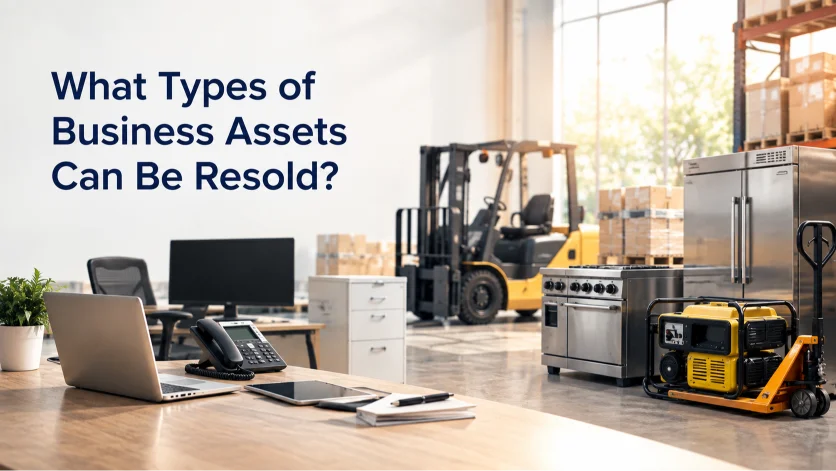
Many commercial assets can have a second life if they remain safe, usable and in demand.
Common examples include plant and machinery, forklifts, warehouse racking, shelving, workshop equipment, vehicles, commercial kitchen equipment, office furniture, retail fixtures and surplus stock.
| Asset | Common Route to Assess |
|---|---|
| Working machinery | Direct sale or auction |
| Forklifts | Direct sale or auction |
| Pallet racking | Specialist buyer |
| Commercial vehicles | Sale or auction |
| Retail fixtures | Sale, auction or bulk clearance |
| Office furniture | Bulk sale or auction |
| Surplus stock | Specialist stock buyer |
| Damaged metal equipment | Recycling |
| Obsolete electrical equipment | Reuse or compliant recycling |
Condition alone does not determine whether an item will sell. Specialist machinery can attract demand even when it looks old, while newer equipment may have limited value if few businesses use it.
What Should You Check Before Choosing a Disposal Route?
Start with an asset register rather than choosing a buyer first.
Record the asset type, manufacturer, model, age, condition, quantity, location and whether removal requires specialist equipment.
Then assess five practical factors: value, demand, time, removal cost and compliance.
A £5,000 asset that costs almost as much to dismantle and transport may produce a very different net return from an item that a buyer can collect easily.
The same principle applies to time. A site with six months before lease expiry can test several sale routes, while a warehouse that must be empty next week may need a faster solution.
When Is Direct Sale the Best Option?
Direct sale can work well when the asset has a reasonably clear market and the business wants a straightforward agreement.
A specialist buyer assesses the equipment, makes an offer and usually agrees collection terms once the deal is accepted.
This route can reduce uncertainty because the seller knows the agreed price before the asset leaves the premises.
It can also suit businesses that do not want to photograph, advertise and manage enquiries for dozens of individual assets.
Advantages of Direct Sale
Direct sales can provide faster decisions, an agreed price and simpler collection planning. They can also allow one buyer to purchase several asset categories together.
Limitations of Direct Sale
A direct buyer takes on resale, transport and market risk. Their offer therefore needs to reflect those costs.
Businesses should compare the total net outcome rather than looking only at headline sale prices.
When Is an Auction the Better Choice?
An auction can be useful when assets have an active buyer market but their exact value is difficult to predict.
Competitive bidding allows interested buyers to determine the final price rather than relying on one negotiated offer.
Auctions can work particularly well for machinery, vehicles, workshop equipment, commercial assets and mixed site clearances where different buyers value different lots.
Surplus Solutions Group’s Auctions Management Service includes valuations, marketing, bidder management and payments for businesses that prefer to let the market determine asset value.
When Auctions Make Sense
An auction may suit specialist equipment, multiple asset categories, business closures and clearances where transparent market testing is useful.
It can also help when no single buyer wants everything on the site.
What Are the Limitations?
Auctions still require planning. Assets may need cataloguing, photographs, lot descriptions, marketing and collection arrangements.
Some lots may fail to reach an acceptable price or attract a buyer, so businesses also need a plan for unsold items.
When Does Recycling Make More Sense?
Recycling becomes the stronger route when an asset has little realistic reuse value.
This can include damaged equipment, heavily worn fixtures, broken metal items or technology that cannot economically return to useful service.
However, working assets should not automatically be treated as scrap simply because they are old.
UK business waste rules require organisations to take reasonable steps to prevent waste and then reuse, recycle or recover it before final disposal.
This makes an asset assessment important. Selling a working item extends its useful life, while recycling may be appropriate once practical reuse no longer makes sense.
Sell vs Auction vs Recycle: Quick Comparison
| Factor | Direct Sale | Auction | Recycling |
|---|---|---|---|
| Price known before removal | Usually | No | Usually based on material route |
| Competitive bidding | No | Yes | No |
| Suitable for working equipment | Yes | Yes | Not first choice |
| Useful for damaged assets | Sometimes | Limited | Often |
| Seller workload | Low to medium | Medium | Low |
| Mixed site clearance | Good | Good | Only waste items |
| Speed | Can be fast | Depends on sale period | Often fast |
| Unsold stock risk | Low after agreement | Possible | Not applicable |
No route performs best in every situation. The strongest commercial plan may combine them.

Use the Value, Speed, Effort, Condition and Compliance Test
Businesses can simplify the decision by checking five factors before selecting a route.
Value
Estimate what the asset may be worth in today’s market rather than relying on its original cost.
Compare the expected return from a direct buyer, auction and recycling route where practical.
Speed
Ask when the site must be clear.
A longer timeframe may support auction marketing or individual sales. An urgent relocation may make a bulk buyer more practical.
Effort
Consider how much staff time the business can invest.
Selling fifty individual items may generate more gross revenue but also create enquiries, inspections, payments and multiple collection appointments.
Condition
Working equipment normally deserves a resale assessment before recycling.
Broken equipment should still be reviewed because parts or materials may retain value.
Compliance
Some assets require specific handling when they become waste.
Electrical and electronic equipment is one example. Current Environment Agency guidance covers reuse and authorised treatment of WEEE, and business waste electrical equipment needs an appropriate route once it is waste.
How Should You Value Unwanted Business Assets?
One of the biggest disposal mistakes is confusing purchase price, book value and market value.
The purchase price records what the business originally paid. Book value reflects accounting treatment, while market value reflects what a buyer may be willing to pay now.
A fully depreciated machine can still have significant resale demand. A newer machine can also be worth less than expected if the technology, market or industry has moved on.
Removal costs matter too. Large equipment may require dismantling, lifting equipment, specialist transport and additional labour.
The most useful figure is often the estimated net recovery value after removal and selling costs.
Is It Better to Sell Assets Individually or as One Lot?
Selling valuable assets individually can expose each item to specialist buyers and may increase total gross revenue.
However, the seller must manage more listings, negotiations, payments and collections.
Selling a complete group to one commercial buyer can simplify the clearance and reduce management time.
A business closing a warehouse may value certainty more than extracting the last possible pound from each desk, shelf and machine.
The correct decision therefore depends on the objective. If maximum recovery is the priority and time is available, individual sales or an auction can make sense.
If the priority is an empty site by a fixed date, a bulk clearance can be more practical.
What Happens During a Business Asset Auction?
A managed auction normally starts with an inspection and asset review.
Items are then grouped into suitable lots, photographed and described so potential buyers understand what is available.
The auction provider markets the sale and opens bidding for a defined period.
Potential buyers can bid on the equipment that interests them rather than purchasing the entire site.
Once the auction ends, winning bidders make payment and collections are arranged according to the sale terms.
Any unsold assets should then be reassessed. They may suit a direct buyer, another sale, recycling or another recovery route.
What Happens When Assets Are Sold Directly?
A direct business asset sale can be simpler.
The seller usually provides an asset list, quantities, photographs and condition information to the prospective buyer.
Specialist or high-value equipment may require an inspection.
The buyer then provides an offer based on expected resale value, condition, quantity, logistics and market demand.
Once both parties agree the terms, collection and payment can be arranged.
This approach can be useful when the business prefers one transaction instead of managing a public sale.
What About Pallet Racking and Warehouse Equipment?
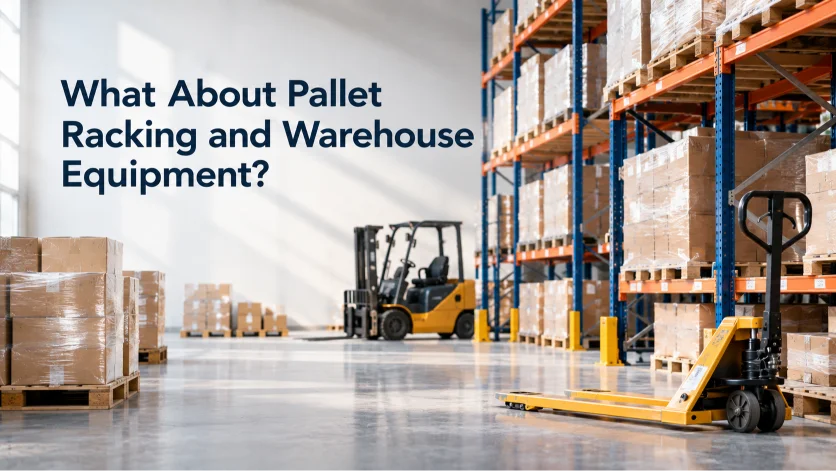
Pallet racking deserves a separate assessment because removal can be a major part of its value.
A large racking system may contain reusable frames, beams and other components, but dismantling and transport require planning.
Provide the manufacturer, approximate quantity, dimensions, photographs and site access information when asking for a valuation.
Other warehouse equipment such as forklifts, conveyors, shelving, packing benches and handling equipment should also be listed separately.
Combining all warehouse assets under the description “fixtures” can hide items that have their own resale markets.
What About Office Furniture and IT Equipment?
Office desks, chairs, storage units and meeting furniture can often be reused, sold or cleared in bulk when condition and quantity support it.
IT equipment needs additional consideration.
Working computers, servers and other electronics may have reuse potential, but businesses should also consider data security before they leave the organisation.
Where electrical equipment has become waste, WEEE requirements and suitable treatment routes may apply. Environment Agency guidance covers the treatment and reuse of electrical and electronic waste through authorised routes.
Secure data handling should therefore form part of any IT asset disposal plan.
What UK Responsibilities Apply When Assets Become Waste?
Once an item becomes business waste, the company has responsibilities for how that waste is handled.
GOV.UK says businesses must keep waste to a minimum, sort and store it safely, complete a waste transfer note for each load leaving their premises and check whether the waste carrier is registered.
Businesses should not assume their responsibility ends when a contractor collects the material.
The waste duty of care also advises businesses to check that private waste carriers have valid registration.
Additional rules can apply to hazardous waste and certain specialist waste streams.
Common Asset Disposal Mistakes That Can Cost Money
Treating Working Equipment as Scrap
A machine may have more value to another operator than it has as raw material. Check resale demand before using scrap value as the benchmark.
Using Book Value as the Asking Price
Accounting value does not tell you what buyers will pay. Use current market conditions and actual asset condition.
Waiting Until the Last Week of a Lease
Urgency reduces your options.
Starting earlier gives time for valuations, marketing, inspections and organised collection.
Ignoring Removal Costs
A high selling price can look less attractive after dismantling, cranes, labour and transport are included.
Compare net returns.
Auctioning Everything Automatically
Some assets have obvious specialist buyers and may suit a direct sale.
Use auctions where competitive bidding offers a real advantage.
Selling Everything to One Buyer Without Comparing Categories
Bulk sales are convenient, but valuable specialist equipment can disappear inside a mixed lot.
Identify high-value assets first.
Using an Unregistered Waste Carrier
If assets become waste, check the business handling them has the appropriate authority.
Forgetting the Asset Register
Finance and operations records should reflect what has been sold or removed.
This is especially important during large relocations or closures.
What Is the Best Route for Different Business Assets?
| Asset Type | Route to Assess First |
|---|---|
| Working forklift | Direct sale or auction |
| Specialist machinery | Specialist buyer or auction |
| Pallet racking | Direct specialist buyer |
| Warehouse stock | Surplus stock buyer |
| Commercial vehicles | Direct sale or auction |
| Retail fixtures | Bulk buyer or auction |
| Office furniture | Bulk clearance or auction |
| Working IT equipment | Reuse or specialist resale |
| Waste electronics | Appropriate WEEE route |
| Damaged metal equipment | Recycling |
The table is a starting point rather than a valuation.
Condition, quantity, location and current demand can change the best route.
When Does a Combined Asset Disposal Strategy Work Better?
Large clearances often produce better practical results when assets are separated by their strongest route.
Imagine a warehouse containing pallet racking, two forklifts, specialist machinery, surplus finished stock, office furniture and damaged metal shelving.
The racking could go to a specialist buyer. Machinery may suit an auction, while the surplus products could be sold to a stock buyer.
Damaged material can then enter a suitable recycling route.
This approach avoids forcing valuable assets into a low-value route simply because it is convenient to process everything together.
How Early Should You Plan a Business Clearance?
Start as early as practical once a relocation, closure or equipment replacement becomes certain.
Time creates options.
A longer window allows the business to identify valuable equipment, seek different valuations, prepare an auction if appropriate and schedule removals around normal operations.
Late planning often turns asset recovery into an emergency clearance.
At that point, the cost of missing a lease deadline or delaying new equipment may matter more than the value of the assets.
A clear timetable should therefore include valuation, sale, payment, dismantling, transport and final waste removal.

How Do You Choose a Business Asset Disposal Company?
Look for a provider that understands more than one exit route.
A company that only recycles may have little reason to identify resale opportunities. An auction-only provider may not offer the fastest option for every item.
Ask whether the provider can assess stock, machinery, racking and other commercial assets separately.
You should also understand who handles dismantling, loading, transport and any remaining waste.
Request clear information about charges, payment, collection and responsibility for unsold items.
For waste services, confirm the appropriate registrations and documentation.
Questions to Ask Before Accepting an Asset Disposal Offer
Ask what assets are included in the offer and whether removal costs are deducted.
Confirm who is responsible for dismantling, transport and site access requirements.
Find out when payment will be made and what happens if the buyer cannot collect on the agreed date.
For branded stock, ask about resale channels where this matters.
For an auction, ask about seller fees, buyer fees, reserve prices, marketing and unsold lots.
These questions make different proposals easier to compare on a like-for-like basis.
Final Thoughts
Unwanted business assets should not all follow the same path. Working equipment may still have a strong second-hand market, specialist assets may benefit from competitive bidding, and items that have reached the end of their useful life can move into an appropriate recycling route.
Start with an asset audit and assess value, speed, effort, condition and compliance before committing to one method.
The strongest commercial clearance often combines direct sales, auctions and recycling rather than choosing one route for the entire site.