
Got machinery sitting unused in your workshop, factory or warehouse? It might still have resale value, even if your business no longer needs it. Selling used machinery in the UK can be straightforward, but finding a genuine buyer, agreeing on a fair price and arranging safe collection often takes more planning than expected. You also need to consider equipment condition, ownership records, payment security and legal responsibilities before handing anything over. Whether you’re replacing older machinery, closing a site or clearing surplus assets, choosing the right selling method can save time and reduce unnecessary costs. This guide explains how to value your equipment, prepare it for sale, avoid common mistakes and complete the transaction safely.
What’s the Fastest Way to Sell Used Machinery in the UK?
Selling directly to an established machinery buyer is often one of the quickest ways to dispose of unwanted industrial equipment. Rather than advertising individual machines, arranging multiple viewings and negotiating with several buyers, you can request a valuation and discuss an offer directly. Some buyers also arrange collection, which can reduce the work involved for your business. However, the fastest option isn’t always the one offering the highest price. Your final decision should account for the amount offered, any removal costs, the payment terms and how quickly the equipment needs to leave your premises.
If you’re working towards a warehouse closure or factory relocation deadline, getting a confirmed offer and collection plan may be more useful than waiting indefinitely for a higher bid. The right approach depends on whether speed, price or convenience matters most.
What Types of Used Machinery Can You Sell?
Many types of commercial and industrial machinery have an active second-hand market. Equipment that is still operational may appeal to businesses looking to expand capacity without buying new machines. Older machinery can also attract interest when replacement parts remain available or the equipment suits a particular production process.
Common categories include industrial manufacturing machinery, engineering equipment, forklifts, conveyors, packaging machines, woodworking equipment, workshop tools and certain types of construction plant. Businesses may also need to dispose of warehouse handling equipment, commercial production assets or complete machinery installations.
Industrial and Manufacturing Equipment
Factories often sell machinery when upgrading production lines, reducing capacity or changing manufacturing processes. CNC machines, lathes, milling machines, presses and other specialist equipment may retain value depending on their specifications and condition.
Buyers will usually want information about the manufacturer, model, age, operating hours and maintenance history. Specialist machinery may take longer to sell because fewer businesses need that particular specification.
Warehouse and Material Handling Equipment
Forklifts, conveyors, pallet handling equipment and other warehouse assets can become surplus when operations move or storage layouts change. These items may interest equipment dealers, warehouse operators or businesses expanding their facilities.
For powered handling machinery, buyers may also ask about inspections, service records, battery condition and lifting capacity. Clear documentation can make it easier to assess the equipment before arranging collection.
Older or Non-Working Machinery
Machinery doesn’t always have to be operational to attract a buyer. Some equipment may hold value for refurbishment, spare parts or recycling, although the appropriate disposal route depends on its condition and intended future use.
If a machine is damaged or unsafe, disclose that clearly. Equipment sold for parts or scrap should be identified and documented accordingly rather than presented as ready for workplace use.
How Do You Know What Your Used Machinery Is Worth?
The resale value of used machinery depends on what buyers are prepared to pay in the current market. The amount you originally spent doesn’t necessarily reflect its present value, particularly if the equipment is outdated or expensive to move.
Several factors can influence the valuation:
- Make and model: Recognised manufacturers and commonly used models may attract stronger buyer interest.
- Age and operating hours: These help buyers assess usage, although maintenance and condition also matter.
- Working condition: Operational equipment may be easier to sell than machinery requiring extensive repairs.
- Service history: Maintenance records can help demonstrate how the machine has been looked after.
- Market demand: Specialist equipment may command a good price but have a smaller pool of potential buyers.
- Location and accessibility: Difficult removal or long-distance transport can affect the amount a buyer offers.
- Included accessories: Tooling, attachments, controls and spare parts may influence the overall package value.
Comparing similar machinery listings can give you a starting point, but advertised prices aren’t always the same as completed sale prices. A professional valuation may provide a more realistic indication of what you could receive.
Should You Repair Machinery Before Selling It?
Not every repair is worth completing before a sale. Minor maintenance may help demonstrate that a machine is operational, but major repairs can cost more than the additional resale value they create.
Ask whether the improvement will meaningfully change the buyer’s offer before investing in repairs. If the machine is being sold for refurbishment or parts, an accurate condition report may be more useful than attempting expensive work.

How Should You Prepare Machinery Before Selling It?
Good preparation can reduce unnecessary questions and make buyers more confident about what they’re purchasing. Start by gathering the machine’s basic details, checking its condition and identifying anything that could affect collection.
You don’t need to make old machinery look new. Buyers generally want accurate information about functionality, specifications and known faults rather than cosmetic improvements that hide its actual condition.
Gather the Machine’s Details
Record the manufacturer, model, serial number, approximate age, location and available operating information. Include dimensions, weight, power requirements and any accessories that will be supplied with the equipment.
If you have the original operating instructions, service records or inspection documents, keep them available. These may be important for both valuation and the buyer’s intended use.
Take Clear Photographs
Photographs help buyers understand what they’re considering before arranging an inspection. Take images showing the entire machine, controls, identification plate and any important attachments.
Include close-ups of visible wear, damage or missing components rather than hiding them. Clear photographs can prevent misunderstandings and reduce the likelihood of a buyer changing their offer after arriving.
Check the Equipment’s Condition
Identify whether the machinery is fully operational, partially operational or currently out of service. Note any known mechanical, electrical or safety problems.
Only arrange a demonstration when the machine can be operated safely by a competent person. Unsafe equipment should not be energised simply to reassure a prospective buyer.
Where Can You Sell Used Machinery in the UK?
There are several ways to sell second-hand machinery, and each involves different levels of effort, cost and uncertainty. A direct buyer may offer speed and convenience, while a private sale or auction may provide wider exposure.
| Selling Method | Main Advantage | Main Consideration |
|---|---|---|
| Direct Machinery Buyer | Straightforward negotiation and potentially faster completion | Offer may reflect resale and removal costs |
| Machinery Auction | Exposure to competing bidders | Final price and sale outcome can be uncertain |
| Private Sale | Greater control over asking price | More time spent advertising and handling enquiries |
| Machinery Broker | Access to specialist buyer networks | Commission and contract terms may apply |
Selling Directly to a Machinery Buyer
A direct buyer assesses the machinery and makes an offer based on its condition, demand and resale potential. If the offer is accepted, the parties can agree on payment, collection and any additional work required.
This route can be useful for businesses disposing of multiple assets or working to a fixed deadline. However, confirm which equipment is included and whether collection, dismantling and loading costs are covered.
Selling Through an Auction
Machinery auctions allow buyers to bid against each other, potentially creating competition for equipment with strong demand. Auctions can also help businesses dispose of several items within a planned sale.
The outcome isn’t guaranteed, and seller fees, transport arrangements and reserve prices need consideration. Check the auction terms carefully before committing equipment.
Selling Machinery Privately
A private sale allows you to advertise directly to businesses or individual buyers. You can set your asking price, negotiate terms and decide which offer to accept.
The main drawback is the amount of work involved. You may need to answer technical questions, organise viewings, verify buyers and manage payment and collection yourself.
Using a Machinery Broker
A broker helps connect machinery owners with prospective buyers. This may be useful for specialist equipment that requires technical knowledge or access to a particular market.
Before signing an agreement, clarify the commission, minimum sale price, exclusivity conditions and what happens if the machinery remains unsold.
How Do You Find a Reliable Used Machinery Buyer?
A genuine buyer should be able to explain how the transaction will work, what information they need and when payment and collection are expected. Be cautious if someone pressures you to release expensive machinery before the agreed payment terms have been satisfied.
For business buyers, check the company name, trading details and available business information. Companies House records can help confirm that a UK limited company exists, although registration alone doesn’t prove that every individual claiming to represent it is genuine.
Ask for a written offer identifying the equipment, agreed price, VAT treatment where applicable, collection arrangements and payment conditions. If anything changes, request confirmation before proceeding.
Warning Signs of a Suspicious Buyer
Be cautious about unexpected requests to redirect payments, unfamiliar third parties collecting on someone’s behalf or sudden changes to agreed bank details. Fraudsters may also use urgency to discourage routine verification.
If a buyer or agent provides revised payment instructions, confirm them using a previously verified contact method. Don’t rely entirely on details supplied in an unexpected email.
What Safety Rules Apply When Selling Used Machinery in the UK?
Selling second-hand machinery for workplace use involves legal safety responsibilities. Under Section 6 of the Health and Safety at Work etc. Act 1974, suppliers must take reasonably practicable steps to ensure equipment supplied for use at work is safe and accompanied by adequate information.
The Health and Safety Executive makes clear that writing “sold as seen” does not remove these duties. Sellers should consider the condition of machinery, necessary safeguards, available instructions and the purpose for which the equipment is being supplied.
Does Used Machinery Need to Meet PUWER Requirements?
The Provision and Use of Work Equipment Regulations 1998, commonly called PUWER, place duties on employers and others responsible for work equipment in use. Machinery supplied for workplace use also falls within relevant supplier safety obligations.
Before selling, review known safety defects and provide appropriate information. If you’re uncertain about the safety of a complex machine, seek advice from a competent person rather than assuming the buyer will resolve every issue.
Can You Sell Machinery Without CE or UKCA Marking?
The answer depends on the machine’s history, the market in which it is being supplied and the applicable product safety requirements. Existing second-hand machinery already lawfully placed on the relevant market isn’t automatically required to receive new conformity marking every time it changes ownership.
Different rules can apply to imported machinery, substantially modified equipment or machinery being placed on the market for the first time. Check the relevant requirements rather than assuming that all older machines need new marking or that no marking obligations apply.
Can Faulty Machinery Be Sold for Parts or Scrap?
Machinery may be sold for spare parts, refurbishment or scrap rather than immediate workplace use. However, its condition and intended purpose must be made clear in the transaction.
A machine that isn’t safe to operate should never be described as ready for normal use. Record the agreed disposal purpose in writing and arrange removal through an appropriate buyer or contractor.
What Documents Do You Need to Sell Used Machinery?
Proper paperwork helps demonstrate ownership, clarify what is being sold and prevent disputes after collection. The exact documents depend on the equipment, transaction and applicable legal requirements.
Useful records may include the purchase invoice, asset register, serial number, maintenance history, inspection reports, operating instructions and relevant conformity documentation.
A written sale agreement should identify the seller and buyer, machinery details, agreed price, payment terms, applicable VAT and responsibility for collection. It should also describe any known defects and clarify when responsibility for the asset transfers.
If the machinery is leased, financed or subject to another party’s interest, establish whether you have authority to sell it before accepting an offer.
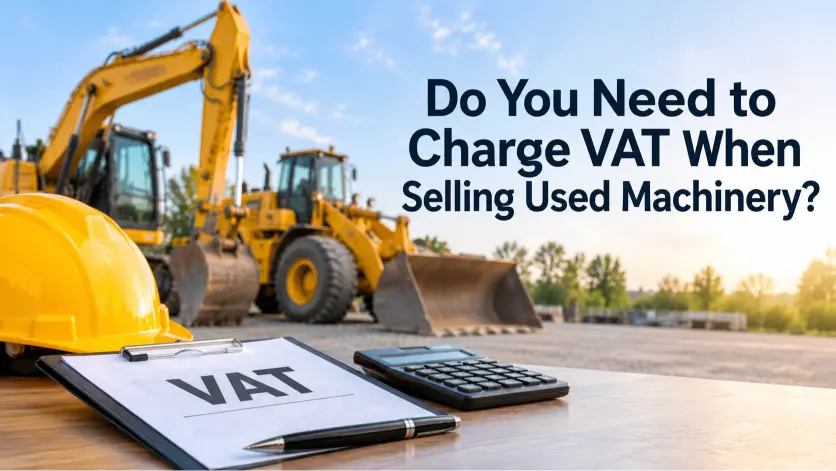
Do You Need to Charge VAT When Selling Used Machinery?
VAT may apply when a VAT-registered business sells machinery forming part of its business assets. HMRC generally treats the disposal of business assets as a supply for VAT purposes, and VAT must be accounted for when the transaction is taxable.
The treatment can differ depending on the seller’s VAT status, the nature of the transaction and any applicable special rules. For example, a sale involving a business transferred as a going concern may need separate consideration.
Before issuing an invoice, establish whether the agreed price includes or excludes VAT and ask your accountant to confirm the correct treatment where necessary.
Don’t assume that machinery is exempt from VAT simply because it’s second-hand.
How Can You Get Paid Safely for Used Machinery?
Secure payment arrangements are particularly important when selling expensive equipment. A legitimate transaction should have clearly agreed payment terms and a documented process for confirming receipt.
For many business-to-business sales, bank transfer is a practical option. However, don’t rely solely on a payment screenshot, email confirmation or message claiming that funds have been sent.
Verify that the correct amount has reached your business bank account and is available before releasing the machinery, unless a separately assessed and properly documented commercial arrangement provides suitable protection.
Should You Accept a Deposit?
A deposit may help demonstrate a buyer’s commitment, particularly when collection requires specialist planning. However, the amount, refund conditions and balance payment deadline should be recorded in writing.
A deposit alone shouldn’t be treated as full payment. Make sure the agreement explains when the remaining amount must be received and what happens if either party cannot complete the transaction.
How Do You Avoid Payment Fraud?
Verify unexpected changes to bank details using an established telephone number or another trusted communication channel. For high-value transactions, having a second authorised member of staff review payment details can provide additional protection.
Retain invoices, correspondence and payment records. If you suspect fraud, contact your bank promptly and report the incident through the appropriate UK fraud-reporting service.
How Should Machinery Collection and Transport Be Arranged?
Transport is often one of the most complicated parts of selling industrial machinery. Large machines may require specialist lifting equipment, dismantling, restricted access arrangements or heavy goods transport.
Confirm who will arrange and pay for collection before accepting an offer. The agreement should also identify who is responsible for disconnecting services, preparing the machine, loading it and managing any damage during removal.
Who Is Responsible for Dismantling Machinery?
Responsibility depends on the agreed contract. Some buyers may provide a complete removal service, while others expect the seller to prepare the equipment for collection.
Before work starts, identify any electrical, hydraulic, pneumatic or other service connections. Isolation and dismantling should be carried out by competent personnel using an appropriate safe system of work.
What Should You Check Before Collection?
Confirm that the collection vehicle can access the premises and that the machine’s size and weight are understood. Restricted doorways, uneven surfaces, loading bays and occupied work areas can all affect the removal plan.
If the machinery is large or complex, a site survey and suitable lifting arrangements may be necessary. Don’t allow an unplanned collection to disrupt employees or create avoidable safety risks.
How Can You Sell Machinery During a Business Closure?
Business closures and factory relocations often create pressure to dispose of machinery before a fixed deadline. Waiting too long can increase storage, security and premises costs.
Start by creating an asset register showing what needs to be sold, its location, condition and removal requirements. Separate equipment that may have resale value from items better suited to refurbishment, parts recovery or recycling.
A buyer willing to assess several assets together may simplify the process, especially when multiple machines need collecting from one site. However, compare the overall offer with the costs and time involved rather than assuming a complete clearance automatically produces the best return.
If the business is in administration, liquidation or another formal insolvency process, establish who has authority to sell the assets before making commitments.
Can You Sell Several Machines Together?
Yes. Selling several machines as a package may make collection easier and reduce the number of separate transactions your business needs to manage.
This can be useful during factory upgrades, warehouse closures or business restructuring. However, grouping valuable specialist machinery with low-value equipment may reduce your ability to negotiate on individual assets.
Ask buyers to explain whether their offer covers the entire package or assigns prices to individual machines. This helps you understand the value of each asset and compare alternative offers.

What Mistakes Should You Avoid When Selling Used Machinery?
A machinery sale can become expensive when important details are overlooked. Unrealistic pricing, incomplete descriptions, unclear collection responsibilities and weak payment procedures are common sources of delay.
Avoid advertising equipment without checking ownership, concealing known defects or agreeing to a sale before understanding the removal requirements. You should also consider any necessary safety checks before describing machinery as ready for workplace use.
Another mistake is comparing offers using only the headline price. A higher offer may be less attractive if you’re responsible for substantial dismantling, transport or commission costs.
The most useful comparison is the amount your business will retain after agreed costs, together with the certainty and timing of payment.
How Long Does It Take to Sell Used Machinery in the UK?
There is no guaranteed timescale for selling used machinery. Common industrial equipment with clear specifications and an attractive asking price may find a buyer more quickly than unusual or heavily damaged machines.
A direct buyer may be able to assess the equipment and make an offer relatively quickly, but collection and payment still depend on the agreed terms. Auctions require planning around sale dates, while private listings may remain active until a suitable buyer appears.
Machinery with missing documentation, difficult access or unresolved safety concerns can take longer to dispose of. Preparing this information before requesting offers may reduce delays.
How Can You Get a Better Price Without Delaying the Sale?
Start with an accurate description and realistic expectations. Buyers are more likely to engage seriously when they can understand the machinery’s condition, specifications and collection requirements from the outset.
Provide clear photographs, relevant maintenance records and honest information about faults. If you have several interested buyers, compare their offers alongside payment and removal terms.
A higher asking price isn’t always worth the extra holding costs. If a machine occupies valuable floor space or delays a premises handover, accepting a reasonable confirmed offer may be more practical than waiting for an uncertain improvement.
Sell Your Used Machinery With Less Hassle
Selling used machinery in the UK doesn’t have to become a long or complicated process. Start with accurate equipment details, establish a realistic valuation and choose a selling method that suits your deadline. Proper safety checks, written agreements, verified payments and organised collection can help protect your business throughout the transaction. Surplus Solutions Group purchases surplus business assets, plant and machinery, and provides clearance services across the UK. If you have unwanted machinery taking up valuable space, contact the team to discuss your equipment and request a no-obligation valuation. A clear offer and agreed collection plan can help you move forward without unnecessary delays.