
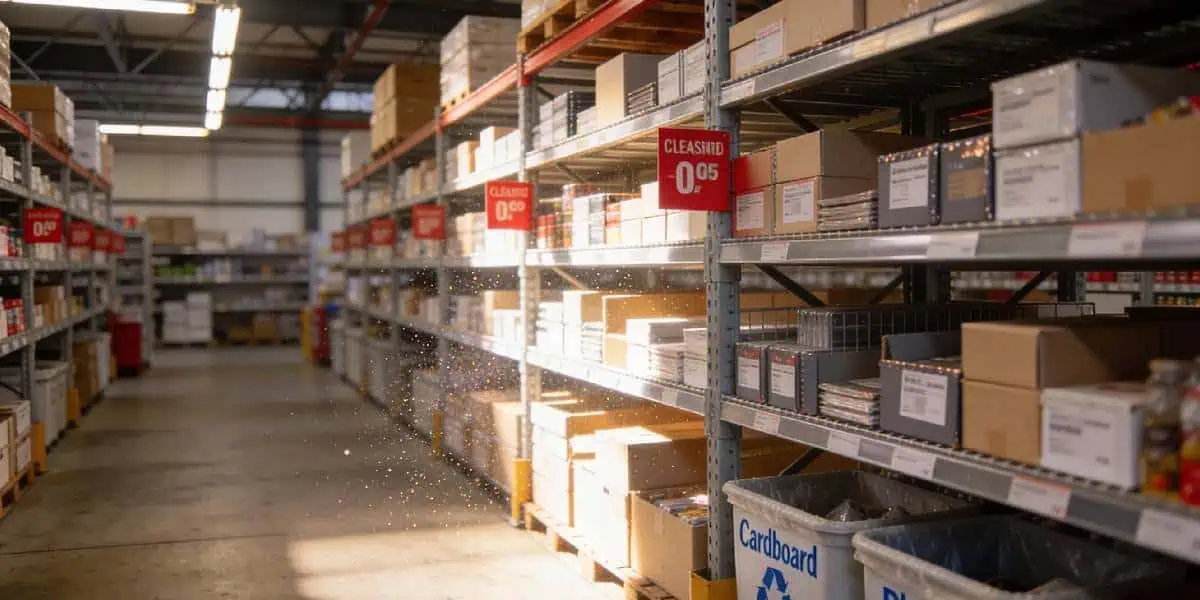
Overstock remains a costly challenge for UK businesses as 2026 approaches. Rising storage fees, tighter cash flow, supply chain uncertainty, and shifting customer behaviour have made holding surplus stock harder to justify. Products that sit too long drain working capital, occupy valuable warehouse space, and then quietly erode margins. Many companies also face pressure to operate sustainably while staying compliant with UK regulations, which adds another layer of responsibility to inventory decisions.
This blog explores practical, forward-looking strategies designed for modern UK operations. By applying the right approach, excess inventory management becomes a business discipline rather than a recurring problem.
Understanding Overstock and Excess Inventory
Overstock refers to products held in quantities that exceed short-term sales needs. Excess inventory often describes goods that have passed peak demand or lost commercial relevance. Both situations restrict cash flow while increasing handling costs. Several factors drive this issue. Weak demand forecasting leads to optimistic purchasing decisions. Bulk buying to secure discounts can inflate volumes beyond realistic sales levels.
Holding unsold stock affects more than storage capacity. Insurance costs rise. Stock deteriorates in quality or relevance. Teams spend time managing items that no longer generate value. Over time, operational efficiency drops and profit forecasts become unreliable. Inventory optimisation strategies help UK businesses balance stock levels more effectively by aligning purchasing decisions with real demand while reducing storage pressure and tied-up cash.
Smarter Demand Forecasting in 2026
Using Data-Driven Forecasting Tools
Modern forecasting relies on data rather than instinct. AI-assisted platforms analyse historical sales, customer behaviour, market trends, and promotional performance. These insights support accurate purchasing decisions while reducing reliance on broad assumptions.
UK businesses benefit most when forecasting tools integrate with sales systems. Patterns appear faster. Variations become visible earlier. Teams can respond before excess builds. Inventory optimisation strategies also improve when forecasting aligns with marketing calendars or product life cycles.
Adjusting Forecasts for Market Volatility
Economic conditions remain unpredictable. Inflationary pressure, consumer confidence shifts, and regulatory changes affect demand patterns. Forecasts need regular adjustment rather than annual reviews.
Flexible planning cycles allow businesses to revise stock commitments monthly or quarterly. Scenario planning supports better responses to sudden demand drops. Stock level control improves when forecasts remain active documents rather than fixed targets.
Improving Inventory Visibility
Real-Time Inventory Tracking
Real-time tracking systems provide immediate insight into stock movement across locations. Businesses see what sells, what stalls, and what risks becoming obsolete. This visibility reduces duplicate ordering while preventing stockouts in high-performing lines.
Accurate data also shortens response times. Teams act earlier when sales slow. Clearance decisions happen before stock loses value. Inventory control techniques rely on timely information rather than retrospective reports.
Integrating Sales and Warehouse Data
Disconnected systems create blind spots. Sales teams may push promotions without knowing true stock levels. Warehouse teams might reorder without understanding demand shifts.
Linking sales channels with warehouse data creates a single source of truth. Decisions improve across departments. Overstock is reduced through coordinated planning rather than isolated actions.
Proactive Stock Reduction Strategies
Early-Stage Clearance and Markdown Planning
Early action prevents surplus stock from becoming unsellable. Planned markdowns protect margin while maintaining sales momentum. Gradual reductions outperform last-minute discounts, which often damage brand value. For compliant, efficient UK warehouse clearance that protects brand value while reducing disruption, expert support from Surplus Solutions Group is available when you need it most.
Clearance strategies work best when defined in advance. Trigger points based on time, volume, or performance guide decisions. This approach keeps excess manageable while preserving cash flow.
Bundling and Alternative Sales Channels
Bundling slow-moving items with strong sellers increases overall turnover. Customers perceive value without deep discounts. Online marketplaces, outlet channels, and trade buyers offer additional routes for clearing surplus.
Diversifying sales paths reduces reliance on primary retail channels. Excess inventory management improves when businesses accept flexible routes to recovery rather than waiting for ideal conditions.
Managing Returns and Reverse Logistics
Faster Processing of Returned Goods
Returns lose value each day they remain unprocessed. Fast inspection protects resale potential. Clear workflows help teams decide next steps quickly. Automation supports faster sorting. Standardised grading speeds up decisions. Businesses recover more value when returns re-enter the stock promptly.
Identifying Resalable Vs Non-Resalable Stock
Not every return belongs back on shelves. Quality grading separates resalable items from stock requiring clearance or disposal. Decision rules remove hesitation while limiting handling costs. Clear criteria also support sustainability goals by directing non-resalable goods toward responsible outcomes rather than prolonged storage.
Strategic Liquidation and Bulk Stock Sales
When Liquidation Makes Financial Sense
Liquidation suits situations where storage costs exceed recovery potential. Bulk sales convert stagnant stock into immediate cash. The key lies in timing. Early liquidation recovers more value. Late decisions increase write-offs. Cost-benefit analysis should include space savings, labour reduction, and cash flow improvement.
Working with Professional Clearance Specialists
Experienced partners manage logistics, valuation, and compliance. They reduce risk while speeding recovery. Trusted clearance specialists help businesses exit surplus positions cleanly without disrupting core operations.
Reducing Storage and Handling Costs
Optimising Warehouse Space
Efficient layouts reduce handling time. Clear zoning supports stock rotation. Regular reorganisation prevents forgotten inventory from accumulating in low-traffic areas. Space audits identify inefficiencies early. Businesses gain capacity without expanding facilities. Stock level control improves when layouts support visibility.
Short-Term Storage Vs Long-Term Holding
Not all stock deserves long-term space. Products with declining demand cost more over time. Clearing early often proves cheaper than extended storage. Decision frameworks help teams choose clearance over retention. This discipline protects margins while maintaining operational flow.
Sustainability and Compliance in 2026
Responsible Disposal and Recycling
UK regulations require careful handling of waste, electronics, and hazardous materials. Responsible disposal reduces legal risk while supporting environmental commitments. Recycling partnerships recover value from materials that no longer suit resale. The process aligns sustainability with financial responsibility.
Ethical Overstock Management
Ethical practices build trust with customers, suppliers, and regulators. Transparent stock handling supports brand reputation. Businesses that prioritise sustainability often strengthen long-term resilience.
Building an Overstock Prevention Strategy
Supplier Agreements and Flexible Ordering
Flexible supplier terms reduce over-commitment. Smaller order quantities, shorter lead times, and vendor-managed inventory improve alignment with demand. Negotiation focuses on responsiveness rather than volume discounts. Inventory optimisation strategies benefit when supply matches real sales patterns.
Regular Inventory Audits
Frequent reviews catch issues early. Audits reveal slow movers, obsolete lines, and forecasting gaps. Corrective action follows while recovery remains possible. Post-review analysis identifies root causes. Teams refine processes rather than repeating mistakes.
Final Thoughts
Proactive overstock management protects profitability in a demanding commercial environment. Early forecasting, clear visibility, disciplined clearance planning, and responsible handling reduce financial strain. Businesses that act quickly retain control while limiting waste. Excess inventory no longer needs to signal failure. With the right systems, clear rules, and expert support, it becomes a strategic challenge that can be resolved efficiently.
UK companies that plan ahead preserve cash flow, safeguard operations, and position themselves strongly for growth beyond 2026. Clear overstock efficiently with trusted strip-out contractors . Surplus Solutions Group handles UK-wide warehouse clearances, recycling, and compliant strip-outs.