
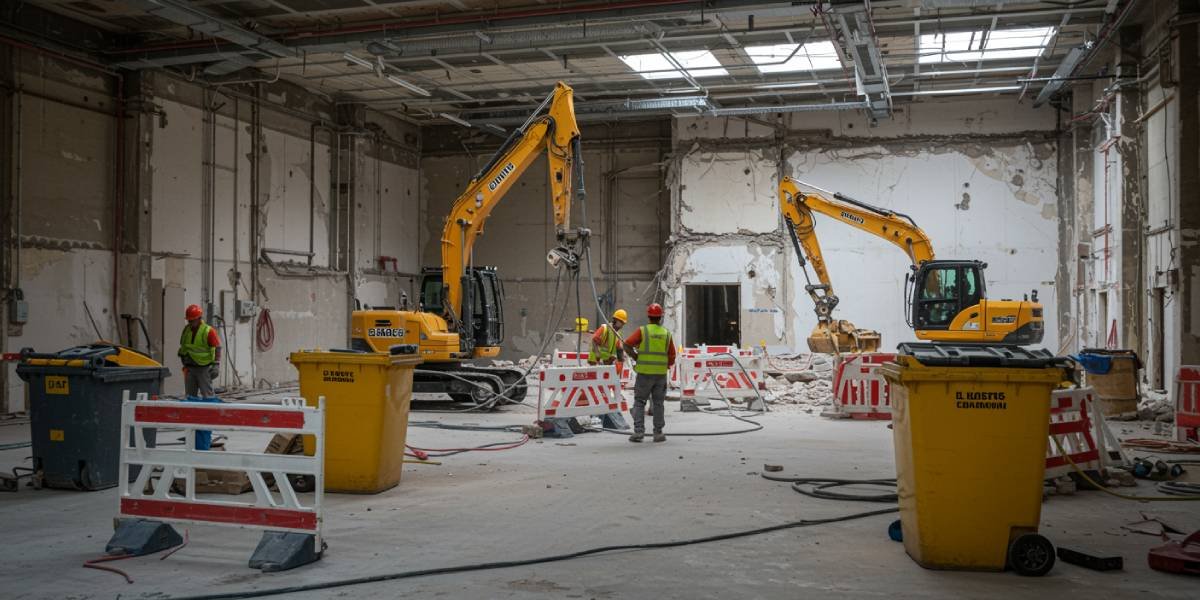
Preparing a site for a strip out, also known as soft strip demolition, is a vital step for safety, efficiency, and regulatory compliance. A commercial strip-out involves removing non-structural elements such as partitions, fixtures, floor coverings, ceilings, and fittings, leaving only the building’s core structure.
Proper site preparation is more than a regulatory requirement. It reduces risk, protects valuable assets, supports responsible waste handling, and lays the groundwork for a smooth and successful refurbishment or redevelopment project.
This guide offers the essential steps for preparing your site, helping businesses plan and execute strip-out projects with confidence.
1. Planning and Initial Assessment
Effective planning lays the foundation of a successful strip-out. Early assessment allows businesses to identify risks, optimise resources, and avoid unexpected delays or costs.
Conduct a Site Inspection
A thorough building survey is crucial. Identify which areas require removal, which elements will remain, and any structural limitations. This information helps develop a precise project plan, preventing damage to parts of the building that must stay intact.
Identify Hazardous Materials
Older buildings may contain asbestos, lead paint, mould, or outdated electrical systems. Engaging qualified specialists ensures hazardous substances are handled safely and in line with regulations. Early identification mitigates health risks and avoids costly delays during active work.
Develop a Project Timeline
Planning a realistic schedule for removal, debris sorting, and waste disposal improves efficiency. Include potential delays for inspections, approvals, and specialist clearance to ensure smooth project flow.
Obtain Permits and Approvals
Check local regulations to secure any necessary demolition, renovation, or waste management permits. Ensuring compliance prevents legal complications and project interruptions.
2. Disconnect Utilities
Safe disconnection of all active services is critical before any strip-out work begins. Qualified professionals should handle all utility isolation to prevent accidents.
- Electricity:Turn off main power lines and secure circuits.
- Gas:Disconnect pipes and seal connections safely.
- Water:Shut off supply lines to prevent leaks and flooding.
- HVAC Systems:Remove or isolate heating, ventilation, and plumbing components.
Proper isolation protects both workers and remaining building elements during the strip-out process.
3. Clear and Protect the Site
Site clearance and protection are essential to maintain safety and preserve valuable assets.
Remove Personal Items and Salvage
All loose items, furniture, and equipment should be removed before work begins. Items intended for reuse or resale must be stored safely. Surplus Solutions Group offers specialist services such as bankrupt stock clearance , ensuring businesses can recover value from surplus inventory while freeing up space for the project.
Secure Access and Boundaries
Install fencing, barriers, and warning signs to control site access. This protects workers, the public, and neighbouring properties from dust, debris, and potential accidents.
Protect Areas to Remain
If the strip-out is partial, cover floors, walls, and fixtures that will remain. Temporary protection prevents accidental damage during the removal process.
4. Pre-Demolition Planning and Checklist
A structured pre-demolition checklist ensures every step is considered before work begins. This organised approach minimises risk, improves compliance, and supports project efficiency.
Survey Confirmation
Ensure all relevant surveys are complete, including structural inspections and hazard assessments. Accurate surveys inform removal methods and confirm which materials can be salvaged or recycled.
Utility Isolation Verification
Confirm electricity, gas, water, and data lines have been safely disconnected by qualified personnel. Proper verification reduces the risk of on-site incidents.
Hazardous Materials Handling
All hazardous substances should be identified, labelled, and managed by trained specialists. Proper containment supports safety and regulatory compliance.
Waste and Recycling Planning
Define how materials will be sorted, recycled, or disposed of before work begins. Planning waste routes and storage areas enhances efficiency and encourages sustainable practices.
Documentation Review
Verify that permits, risk assessments, and method statements are approved and available on-site. Maintaining comprehensive documentation ensures legal compliance and transparency.
5. Logistics and Material Handling
Efficient handling of materials and debris is central to a smooth strip-out process. Planning logistics in advance minimises delays and supports responsible waste management.
Plan Debris Removal
Arrange skip hire or waste removal services before work starts. Select skip sizes appropriate for the project’s scale to maintain safe and organised storage of debris.
Implement Material Sorting
Separate materials into categories such as metal, timber, concrete, and general waste. Sorting on-site increases recycling efficiency, lowers landfill costs, and supports environmental responsibility.
Allocate Storage Areas
Designate clear storage spaces for reusable items and recyclable materials. Organised storage keeps the site tidy and ensures assets are protected during the strip-out.
6. Final Safety Preparations
Even after thorough planning, reinforcing safety is essential before work begins.
Emergency Protocols
Establish evacuation routes and emergency procedures for all personnel. Clear guidelines ensure everyone knows what to do in the event of an accident.
Personal Protective Equipment
Make sure all workers have the necessary PPE, including hard hats, steel-toed boots, gloves, high-visibility clothing, and eye protection.
Staff Briefings
Conduct team briefings to explain site hazards, removal methods, and responsibilities. Clear communication reduces confusion and ensures a safe, coordinated approach.
7. The Role of Contractors
Professional contractors streamline preparation and delivery. Experienced teams understand regulatory requirements, hazard management, and efficient material recovery. They guide businesses through each stage, from planning and pre-demolition surveys to waste handling and site security.
Engaging a specialist contractor helps avoid common pitfalls, protects valuable assets, and maximises material recovery for reuse or recycling. This approach improves project efficiency and reduces costs while maintaining compliance and safety.
8. Managing Surplus Materials
During commercial strip-outs, businesses often encounter surplus goods or stock that can be salvaged. Specialist services ensure these items are handled responsibly. Recovered assets can be repurposed, resold, or recycled, supporting both sustainability and financial recovery.
Proper handling of surplus materials reduces landfill contributions, keeps work areas organised, and allows for better reuse of valuable items. Surplus Solutions Group offers tailored solutions for surplus stock management, ensuring smooth integration with the overall strip-out process.
Conclusion
Preparing a site for a strip-out requires careful planning, thorough surveys, safety measures, and effective waste management. A structured pre-demolition checklist ensures all critical steps are addressed, from hazard identification to debris removal and storage.
Working with experienced strip-out contractors like Surplus Solutions Group ensures your commercial strip-out is executed efficiently, safely, and responsibly. Our expertise supports site preparation through strip-out, helping businesses deliver projects on time and in compliance with safety and environmental regulations.